
 Posts
Posts


I think this is a thoughtful article about why it is important, from a business standpoint, to work and teach farmers sustainable farming practices. Take a moment to read it when you can spare the time.
http://online.wsj.com/article/SB10001424052748704608504576208123457763158.html?mod=dist_smartbrief
Showing posts with label tropical plants. Show all posts
Showing posts with label tropical plants. Show all posts
Monday, March 21, 2011


Tuesday, June 22, 2010
A funny thing happened on the way to Finmac.
Finmac is surrounded by banana fields; fields that are owned by a large well known corporation here in the US. Two problems with banana and pineapple fields, one is the deforestation of the jungle and the other is heavy use of pesticides. The banana fields surrounding Finmac are not organic and many different types of chemicals are used to prevent a myriad of issues that bananas are prone towards. The bananas are covered, while on the tree, with large blue bags that are lined with a pesticide - this pesticide deteriorates quickly once the bag is removed - as well as crop dusting; this is done with special planes that spray the fields. As we drove down a long narrow dirt road to our destination, a plane was dusting the banana fields with pesticide(s) while at the same time, many people and animals were working in the fields or walking along the road. The crop duster was releasing pesticide while flying directly over them which included the bus we were traveling in; you could see the droplets on the windows and sides of the bus. We were shocked. When we arrived at the Finmac, we were told that this was normal practice and, while the corporation verbally does not want them to do this, it is done and there is no reprisal from the corporation.
 This shows the deforestation of the forest to plant pineapple plants. I am not convinced that this is necessary as the cacao and coffee farms are proving.
I wondered how a cacao farm that is certified organic can be surrounded by this indiscriminate dusting and still be certified. Hugh, Finmac's owner, had a brilliant solution that took into account the beauty of the jungle; plant trees that will grow very tall, very quickly around his entire farm. This forced the dust croppers to pull up very sharply when they reached the edge of Finmac's property. This sharp pulling up of the dust cropper meant the pilot had to stop dusting and, combined with a buffer of land that allows for pesticide drift, the remaining cacao trees are not affected by this spraying. While this saves Finmac's organic certification, I wonder what the long term affects this has on people and animals. I have been unable to eat a banana, and it has been nearly three months since my trip in Costa Rica.
 This shows the deforestation of the forest to plant pineapple plants. I am not convinced that this is necessary as the cacao and coffee farms are proving.
 Wednesday, June 2, 2010
More pictures from Catie.
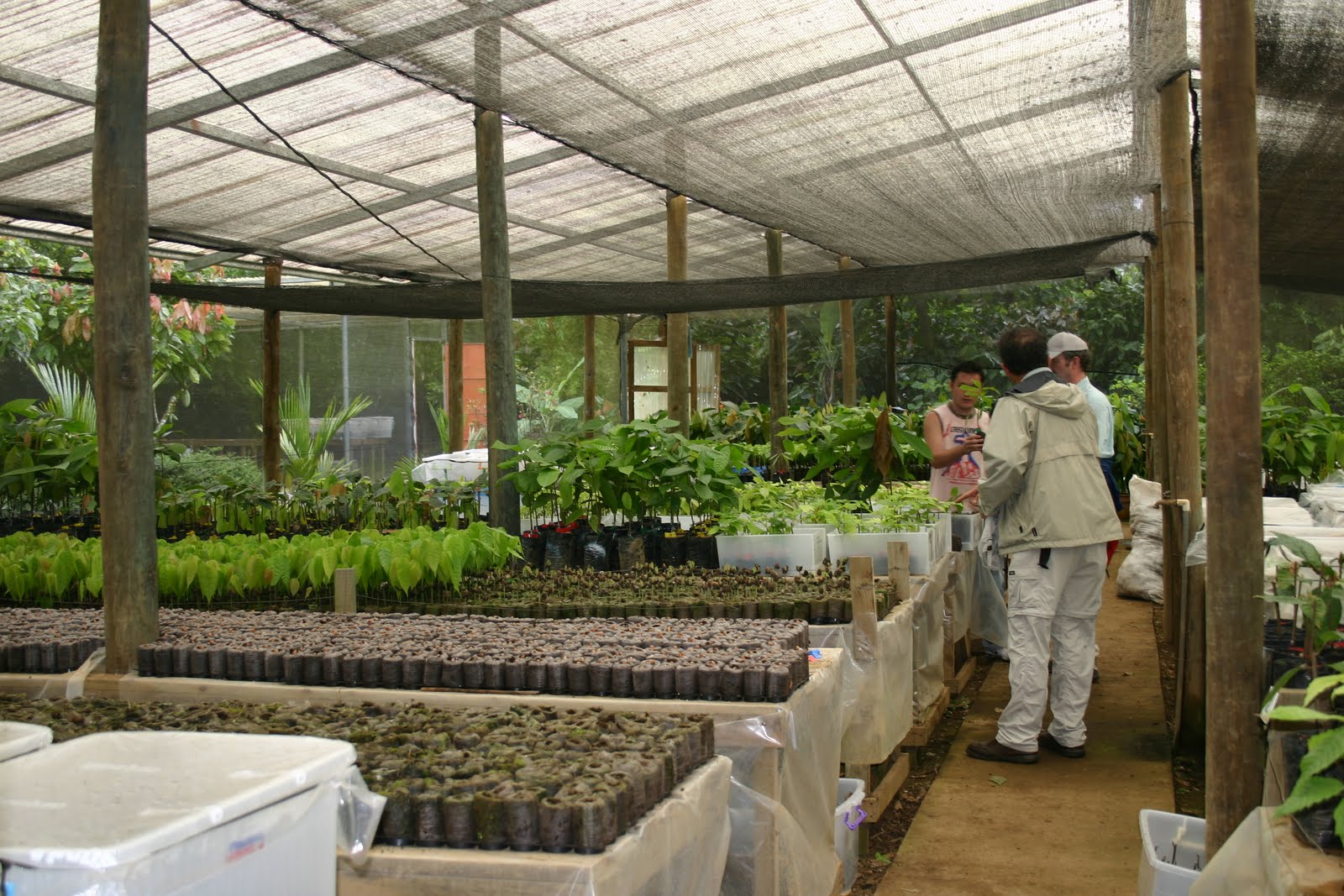

If you decide to visit Costa Rica it is worth the time and effort to tour Catie's Tropical Plants Tour. Our tour guide, a lovely, vibrant young woman, was interesting and filled with loads of information of the many tropical plants.
Subscribe to:
Posts (Atom)
